


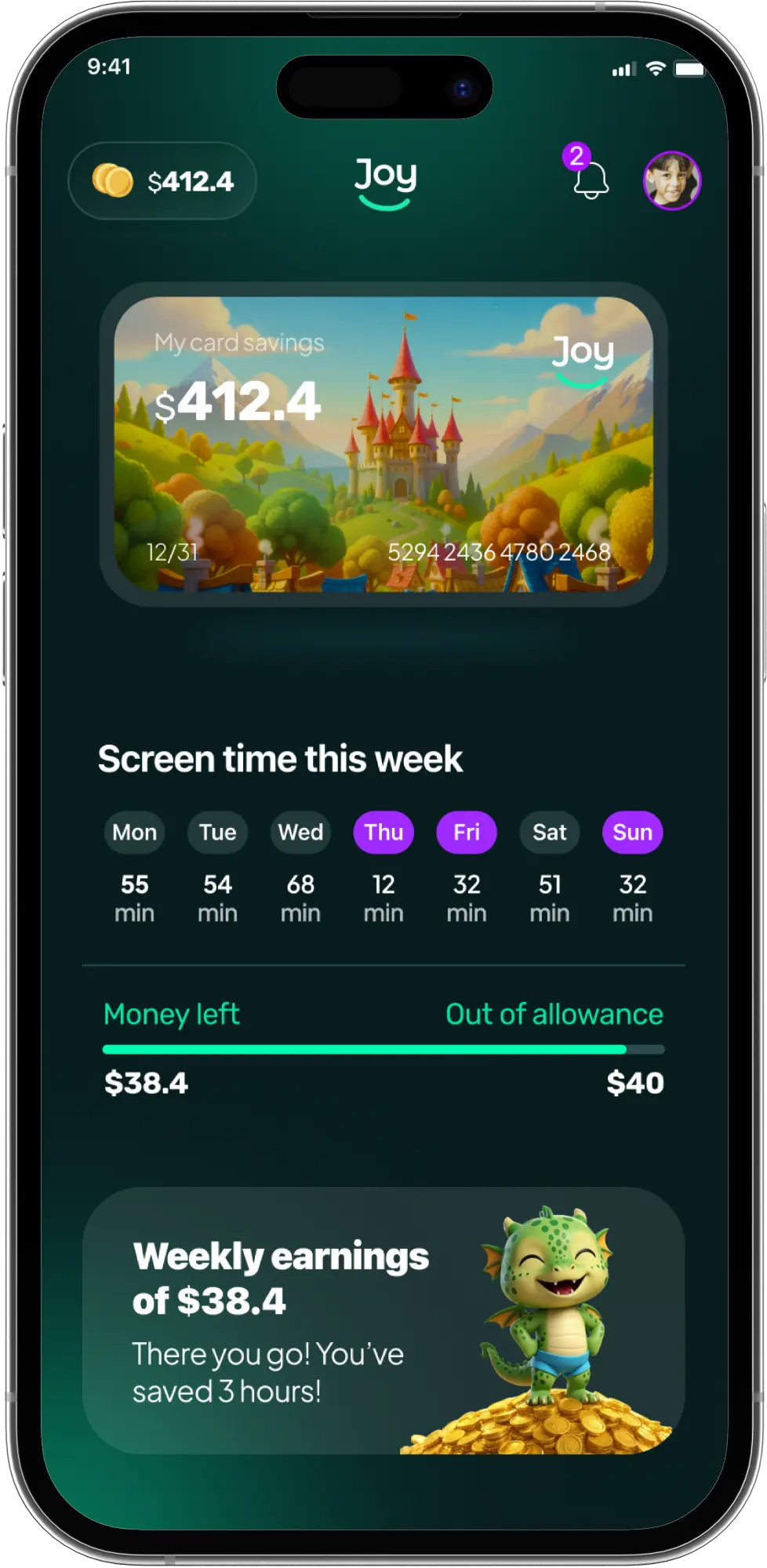
Connecting between allowance to screen time
The first digital walletto change screen habits
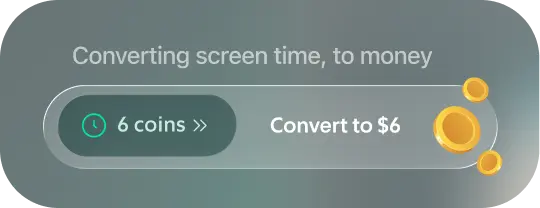
Every minute of screen time saved is real money.
At the end of the week, kids cash in their savings and realize every choice matters, and time is money.
no more fighting over screens
The digital wallet that turns screen time into attention coins, positively changing the way children and parents deal with screens
5 hours a day.
That’s the average amount of time kids spend on screens in 2026, and it’s only increasing.
It’s time to put the choice back in our hands.
Introducing

Every minute of screen time saved is real money.
At the end of the week, kids cash in their savings and realize every choice matters, and time is money.
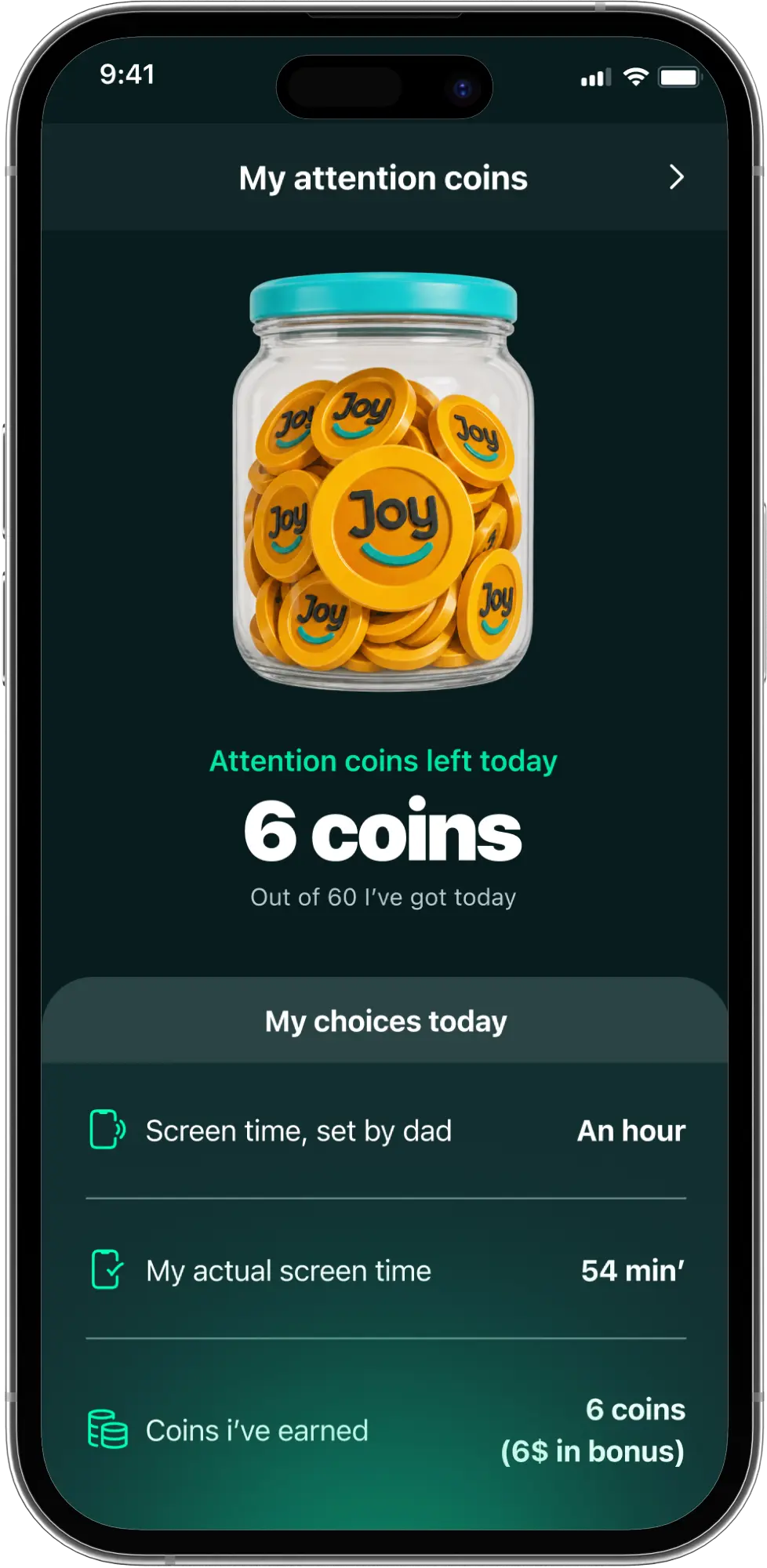
The parent sets weekly allowance and attention
The rules are simple: when the kids manage screen time wisely, they earn their allowance and even more. However, if they exceed the limit, they must pay from their allowance, fostering personal financial responsibility.
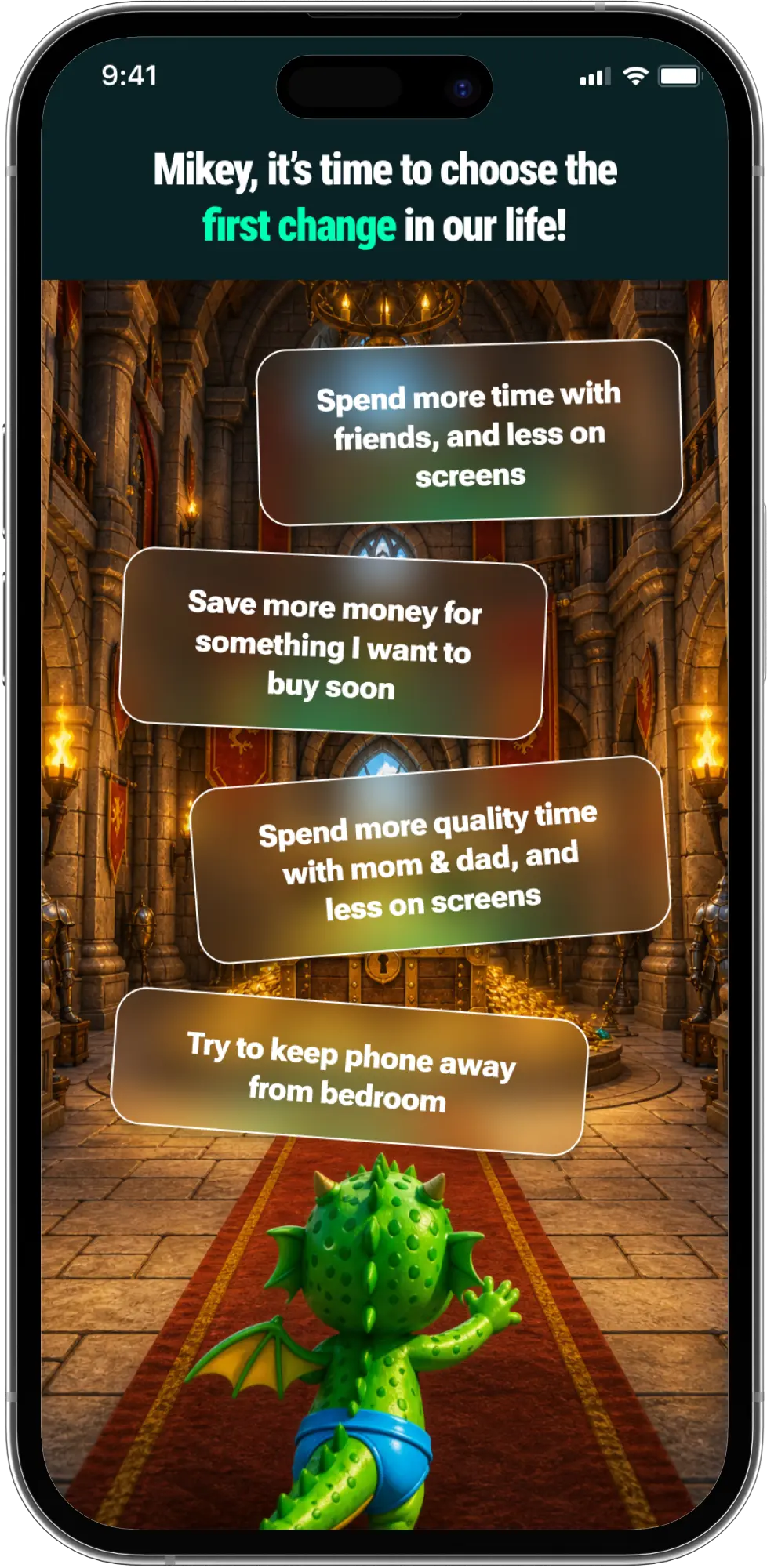
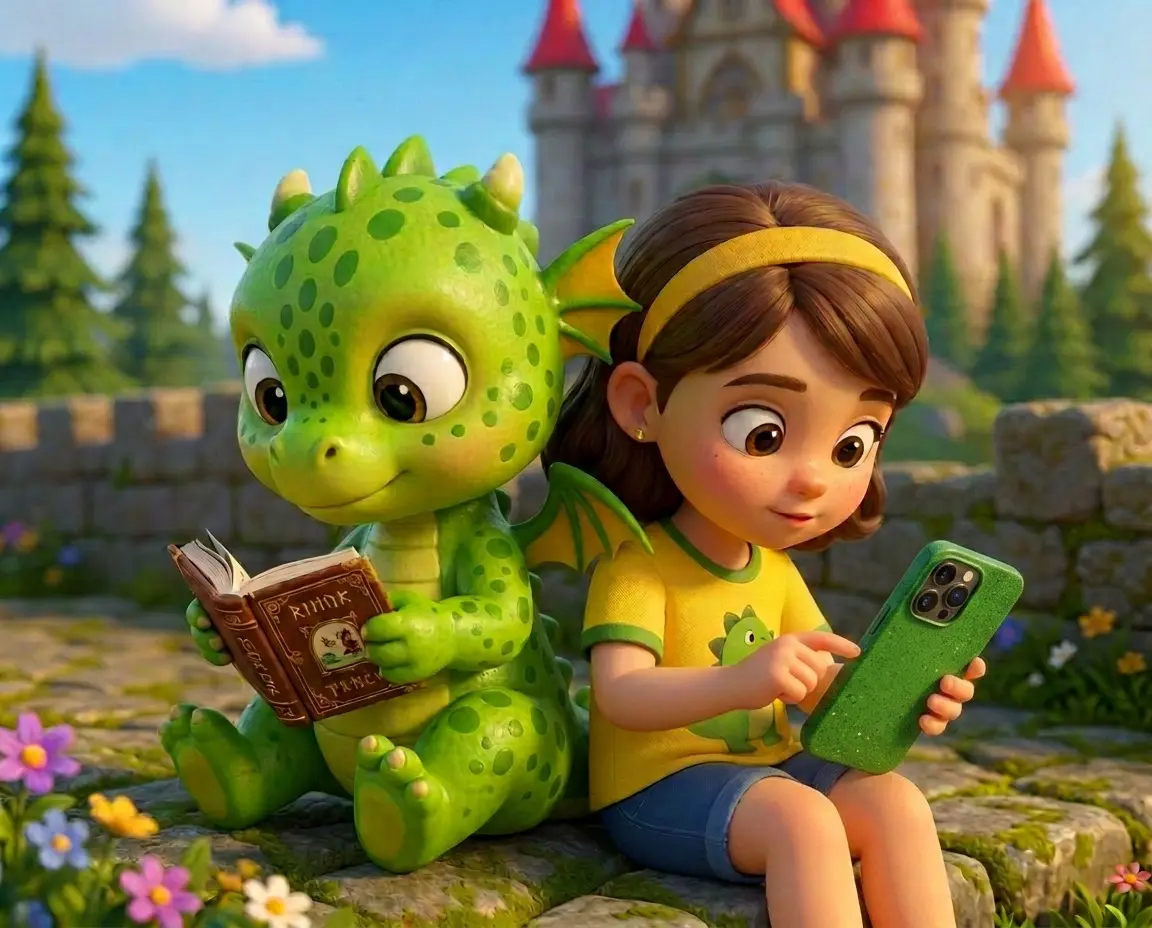
A game character will accompany you from the start of the process.
Smart playfulness, rewards, and tasks turn habit development into an experience kids want to return to, strengthening internal motivation over time.
Three simple steps to start reshaping screen habits together with your kids.
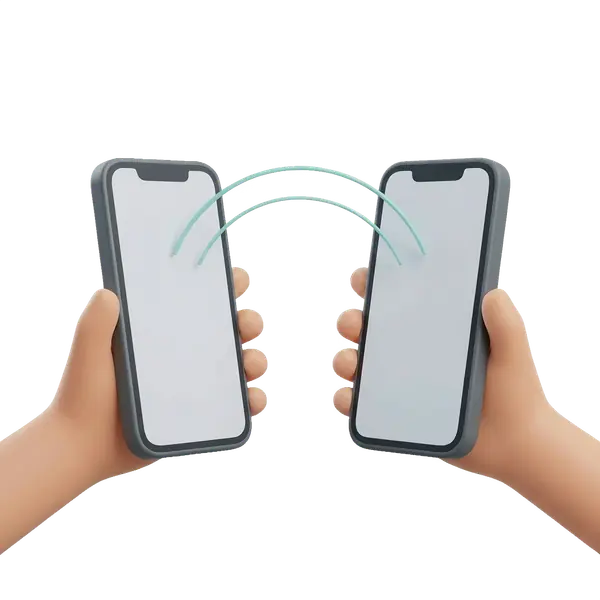
Parent and child join the app together and start a shared journey where both win from day one: more independence (and money) for the child, fewer screen-time battles for the parent.
Behind every feature in Joystie are proven behavioral science principles that help children develop healthy digital habits
Behavioral economics research, including the work of Richard Thaler, clearly shows that feedback and rewards significantly influence decision-making and deep behavior change: an approach directly applied in Joystie.
A large-scale study by the University of Pennsylvania and Carnegie Mellon University among thousands of students found that small incentives can help form new habits that persist even after the incentives end.
A systematic review of dozens of studies on Gamification in Education found that playfulness, immediate feedback, and rewards boost children's engagement and motivation in learning and habit development.
We catch ourselves pulled into endless scrolling and instantly regret it. When our kids start copying us, we see the problem: a generation growing into a new reality where, over time, children become more and more addicted to screens.
What kind of child do we want in the age of AI?

Meir Nitzan
Founder of Joystie
Reward is only the starting point, not the goal.
Just as kids receive allowance to learn financial responsibility, Joystie uses reward as an educational tool that shows time has value. The aim is self-control, decision-making, economic thinking, and habits that last after the reward is gone.
Going over the limit costs from their allowance - just like in the real world. The child learns that choices have a price, instead of the parent becoming a police officer who cuts the screen by force.
Yes. Each child can have their own screen limit, allowance, and attention coins that fit their age, routine, and your family.
Joystie runs in the browser and connects to family screen-time management. We keep expanding device and OS support based on what families need.
Yes. You can start with a trial, experience the process with your kids, and only then decide if it’s right for your family.